The Link Between Early Childhood Activity and Cognitive Development
Why Active Movement Helps Kids Learn, Think, and Grow
Parents in Grand Prairie, TX often search for the best activities to help their children grow physically and mentally. While reading, schoolwork, and structured learning are important, scientific research shows that physical activity during early childhood plays a major role in cognitive development.
Movement-based activities, such as climbing, balancing, swinging, and navigating obstacles, don’t just build stronger bodies. They help children develop memory, attention, problem-solving skills, and confidence.
This is one of the reasons why many families in Grand Prairie and the Dallas–Fort Worth area are exploring movement-focused programs like ninja warrior–style training classes at Amped Obstacles. These types of activities combine physical challenges with cognitive engagement, helping kids develop both strong bodies and strong minds.
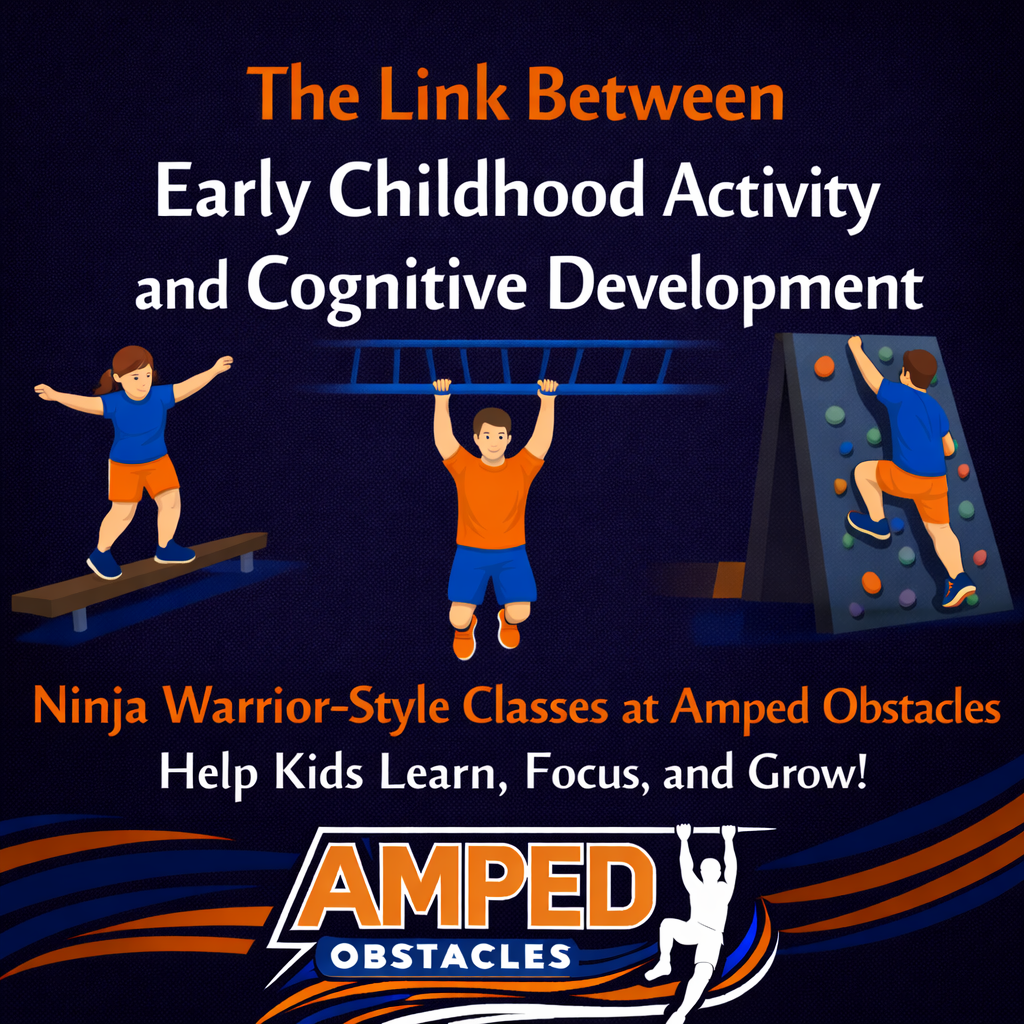
Early Childhood Is One of the Most Important Periods for Brain Development
During childhood, the brain grows rapidly. Scientists estimate that a child’s brain forms millions of neural connections every second during early development.
These connections influence how children:
• focus attention
• process information
• solve problems
• regulate emotions
• remember and learn new skills
Research shows that active play and physical activity can significantly support this brain development by strengthening the neural systems involved in learning and cognition.
Activities that require coordination, movement, and problem-solving—like obstacle training—can be particularly beneficial because they stimulate multiple brain systems at once.
How Physical Activity Improves Brain Function
Scientific studies show that exercise affects the brain in several important ways.
Physical activity increases blood flow to the brain, delivering oxygen and nutrients that support brain health and development.
Movement also stimulates the production of brain-derived neurotrophic factor (BDNF), a protein that supports the growth and survival of brain cells and helps strengthen the neural pathways involved in learning and memory.
These biological changes support improvements in:
• focus and attention
• memory formation
• cognitive flexibility
• learning ability
For children, this means that active play can directly support academic readiness and classroom performance.
Why Movement-Based Activities Improve Executive Function
One of the most important cognitive skills influenced by physical activity is executive function.
Executive function includes the mental abilities that help children:
• pay attention
• follow instructions
• manage impulses
• switch between tasks
• solve problems
Research consistently shows that children who participate in regular physical activity demonstrate improvements in executive functioning.
Activities that require coordination and problem-solving—like navigating obstacle challenges—are especially effective because they require children to think while they move.
This combination of physical and mental engagement strengthens the brain systems responsible for learning and decision-making.
Motor Skill Development and Cognitive Growth
Motor skills and cognitive development are closely connected.
When children improve their motor skills, they also improve their ability to process information and respond to new challenges.
Motor skills include abilities such as:
• balance
• coordination
• agility
• body awareness
• movement control
Programs that focus on movement challenges help children develop these skills while also stimulating the brain areas responsible for attention and learning.
Obstacle-based training environments naturally develop these abilities because kids must constantly adjust, react, and solve movement challenges.
Why Obstacle-Based Training Is So Effective for Kids
Many physical activities involve repetitive movements.
Obstacle training is different.
Obstacle courses challenge children to:
• climb and explore
• balance on narrow platforms
• swing between obstacles
• adjust their body position
• think quickly about movement solutions
Each obstacle becomes a physical and mental puzzle.
This type of training stimulates both the body and brain simultaneously, which is why it can be especially beneficial for developing coordination and cognitive skills.
How Amped Obstacles Supports Physical and Cognitive Development
In Grand Prairie, TX, Amped Obstacles provides an exciting environment where children can develop these movement and cognitive skills through ninja warrior–style training classes.
Kids participating in classes at Amped Obstacles encounter obstacles such as:
• climbing rigs
• hanging grip challenges
• balance obstacles
• agility elements
• movement-based obstacle courses
Each obstacle encourages children to think, move, and problem-solve at the same time.
Instead of repetitive drills, kids experience exciting challenges that help them develop:
• strength and coordination
• balance and agility
• confidence in movement
• focus and problem-solving skills
These experiences support both physical development and cognitive growth.
Confidence and Emotional Development Through Movement
Physical activity doesn’t only influence cognitive skills. It also plays a role in emotional development.
When children successfully complete physical challenges, they experience a sense of accomplishment.
This helps them build:
• confidence
• perseverance
• resilience
• self-esteem
At Amped Obstacles, every obstacle conquered becomes a moment of success for a child.
These small victories encourage kids to keep challenging themselves and developing new skills.
Why Grand Prairie Families Are Choosing Active Programs
Parents searching for activities in Grand Prairie, TX often want programs that provide more than just entertainment.
They want activities that help their children:
• stay physically active
• develop confidence
• build coordination
• improve focus and learning ability
Movement-based programs like the classes at Amped Obstacles offer a powerful combination of physical activity and cognitive engagement.
Kids get to move, explore, and challenge themselves in an environment designed to support healthy development.
Movement Builds Strong Bodies and Strong Minds
The connection between early childhood activity and cognitive development is clear.
When children participate in regular physical activity, they strengthen the brain systems responsible for learning, attention, and memory.
Programs that combine movement, coordination, and problem-solving—like the ninja warrior–style classes at Amped Obstacles in Grand Prairie—can help children develop the skills they need to thrive both physically and mentally.
Climb.
Balance.
Swing.
Conquer obstacles.
And get AMPED. 🥷💥
SERVICES AT AMPED OBSTACLES:
Athletic Performance Classes
Retirement Parties
Ninja Workshops
