Can Obstacle Course Training Help Improve Swimming?
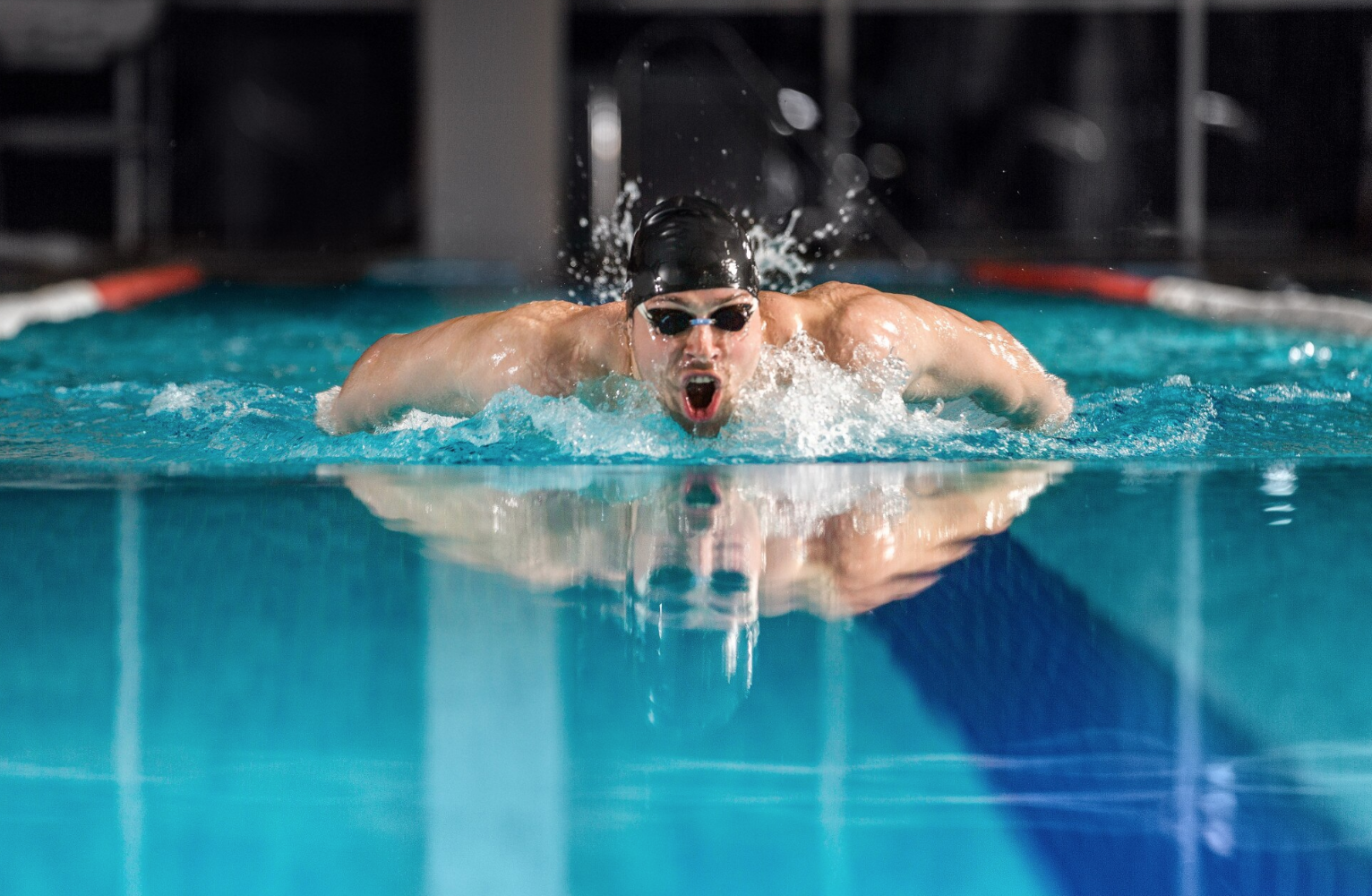
Can Obstacle Course Training Actually Help You Become a Better Swimmer?
If you want to become a better swimmer, the most important training happens in the water.
There is no substitute for swimming technique, stroke mechanics, starts, turns and sport-specific coaching.
But that doesn't mean all of a swimmer's training needs to happen in a pool.
Competitive swimmers commonly incorporate dry-land strength and conditioning alongside their swim training. Research has examined resistance training, power development, plyometrics and core training as ways of developing physical qualities that may contribute to swimming performance.
That's where obstacle course and athletic performance training at Amped Obstacles in Grand Prairie, Texas can fit into the bigger picture.
We aren't a swim school.
We aren't going to teach your child freestyle, backstroke, breaststroke or butterfly.
We develop athletes.
And for swimmers, becoming stronger, more powerful and better able to control their body can be valuable supplemental training.
Swimming Requires More Than Cardiovascular Endurance
Watch a competitive swimmer closely and you'll quickly realize that swimming isn't simply an endurance sport.
Athletes have to generate force repeatedly while maintaining efficient movement.
Starts require explosiveness.
Turns require athletes to rapidly reposition their bodies and push forcefully away from the wall.
Swimming itself places significant demands on the upper body and trunk.
Research examining competitive youth swimmers has identified muscular strength and power among the physical qualities associated with swimming performance.
That's one reason swimmers shouldn't necessarily think of strength and conditioning as something exclusively for football players, basketball players or sprinters.
1. Building Upper-Body Strength
Obstacle courses can require a tremendous amount of upper-body involvement.
Think about what happens when an athlete:
Hangs from a bar
Climbs a rope
Traverses an obstacle
Pulls their body upward
Moves from one hanging implement to another
Controls their body while suspended
Those movements challenge the arms, shoulders, upper back, grip and trunk.
That's particularly interesting for swimmers because research has found relationships between upper-body strength and swimming performance, although exactly how dry-land strength improvements transfer into the water depends on the training method and swimmer.
That distinction matters.
We're not claiming that climbing a rope automatically produces a faster freestyle stroke.
Instead, obstacle training provides another way to challenge and develop upper-body strength and athletic capacity outside the pool.
2. Developing Core Strength & Body Control
A swimmer's body needs to work as a connected system.
That's why the core matters.
At Amped Obstacles, athletes regularly encounter situations where they must stabilize their trunk while climbing, hanging, balancing, jumping or moving through an obstacle.
Recent research provides an interesting connection here.
A systematic review and meta-analysis involving youth swimmers found that core stability training had a statistically significant overall effect on swimming performance after the authors accounted for substantial heterogeneity, with particularly favorable findings for the 50-meter sprint and backstroke.
Another recent meta-analysis reported improved 50-meter freestyle performance following core stability training, although evidence for the 100-meter freestyle was inconclusive.
That doesn't prove Ninja Warrior obstacles improve swimming times.
It does show why core development can be a legitimate part of a swimmer's supplemental conditioning program.
3. Power for Starts
A race can begin before the swimmer ever takes a stroke.
The start matters.
Competitive swimmers need to generate explosive force from the starting block and transition efficiently into the water.
A systematic review examining dry-land resistance training and swim starts found a very strong relationship between start performance and measures including vertical bodyweight jumps and jump height. The review also found evidence supporting plyometric training for improving aspects of swim-start performance.
Now think about obstacle training.
Jumping.
Landing.
Explosive lower-body movement.
Rapid force production.
Getting up a warped wall.
These aren't swim starts, and they shouldn't replace swim-start practice.
But they can challenge some of the broader strength and power qualities that athletic swimmers need.
4. Strength & Power for Swimming Turns
The wall isn't a rest break.
A fast turn requires an athlete to reposition the body and then generate force rapidly as they push away.
A systematic review specifically examining dry-land training for swimming turns found that strength, ballistic and plyometric programs targeting neuromuscular qualities of the leg extensors appeared effective for improving turn performance.
That gives swimmers another reason to think beyond upper-body training.
Lower-body strength and explosiveness matter too.
5. Grip Strength & Hanging Strength
Grip isn't usually the first thing parents associate with swimming.
At Amped, however, it's difficult to ignore.
Monkey bars, ropes and hanging obstacles require athletes to maintain control while supporting and moving their body.
For swimmers, we would view this primarily as general upper-body and athletic strength development, rather than claim a direct grip-to-swim-performance relationship.
That's an important difference.
Our goal isn't to invent a connection simply because two activities use the arms.
Our goal is to use obstacle training to build a more capable athlete.
6. Coordination & Body Awareness
Obstacle training isn't just about strength.
An athlete may have to judge distance, coordinate their limbs, stabilize their trunk, transition between obstacles and adapt their movement almost instantly.
Swimming obviously occurs in a completely different environment.
But swimmers are still athletes.
Developing greater overall movement competency, coordination and body control can be useful components of a broader athletic development program.
At Amped Obstacles, athletes don't simply lift something and put it back down.
They have to figure out how to move their bodies through challenges.
7. Strength Training for Youth Swimmers
Parents sometimes worry that strength training isn't appropriate for young swimmers.
The question shouldn't simply be whether a child "lifts weights."
The more important questions involve the athlete's age, maturity, exercise selection, progression, supervision and technique.
Research specifically examining adolescent swimmers has found that both land-based and water-based resistance training can improve swimming performance, although the optimal training method depends on numerous factors.
For younger athletes, training should be appropriately coached and progressed.
At Amped, we're interested in athletic development, not seeing how much weight a child can lift.
Does This Mean Swimmers Should Replace Pool Training With Obstacle Training?
Absolutely not.
If your child wants to become a better swimmer, they need to swim.
A qualified swim coach develops things we cannot replicate on an obstacle course:
stroke technique, breathing, starts, underwater technique, turns, pacing and race strategy.
Obstacle course training should be viewed as supplemental dry-land athletic training.
In fact, recent research comparing physical-training approaches in competitive swimmers found particularly favorable results when aquatic training and dry-land resistance training were combined.
That's the model that makes sense to us:
Swim training develops the swimmer.
Supplemental athletic training helps develop the athlete.
Dry-Land Training for Swimmers in Grand Prairie, TX
If you're searching for:
dry land training for swimmers near me
strength training for swimmers in Grand Prairie
swimming conditioning near Dallas
sports performance training for swimmers
youth swimmer strength training DFW
athletic performance coaching for swimmers
swimmer core training
swimmer power training
or supplemental training for competitive swimmers, Amped Obstacles offers a very different training environment.
We're located in Grand Prairie and serve athletes and families throughout Grand Prairie, Arlington, Irving, Dallas, Mansfield, Cedar Hill and surrounding DFW communities.
Why Amped Obstacles?
A swimmer doesn't necessarily need another traditional gym workout.
Obstacle training gives athletes an opportunity to challenge strength and movement through activities that can include:
Climbing. Hanging. Pulling. Jumping. Landing. Balancing. Swinging. Stabilizing. Accelerating. Coordinating.
And perhaps most importantly for younger athletes, they're actually doing something.
They're solving movement problems.
They're attempting obstacles.
They're developing skills.
They're working toward the next challenge.
That's what makes Amped Obstaclesdifferent.
Can Obstacle Course Training Help Improve Swimming?
The most accurate answer is:
It can potentially complement swimming training by developing physical qualities that matter to athletic performance.
Research supports the broader use of dry-land strength and conditioning for swimmers, with evidence for benefits from resistance, power, plyometric and core training in certain swimming-performance outcomes. The research does not establish that obstacle course training itself directly makes swimmers faster.
That's why Amped shouldn't replace your swim coach.
We complement the work they're already doing.
Train Outside the Pool at Amped Obstacles
Your athlete spends hours developing their swimming ability.
Give them an opportunity to develop the athlete behind that ability.
At Amped Obstacles in Grand Prairie, TX, youth athletes can challenge their strength, power, coordination, balance, core control, upper-body strength and overall athleticism through obstacle-based training.
Whether your child swims recreationally, competes for a swim club or is preparing for school swimming, talk with us about adding supplemental athletic training to their routine.
Amped Obstacles
2626 Aero Dr.
Grand Prairie, TX 75052
🏊 Swimmers & Parents: Book a FREE Trial Class
New youth athletes can experience Amped before deciding whether it's the right complement to their swimming program.
Contact Amped Obstacles and book your child's FREE Trial Class.
Keep swimming. Keep working with your swim coach. And use Amped to help build a stronger, more capable athlete outside the pool.

Relevant Articles:
What Classes Do You Have to Take for Early Childhood Development? (Grand Prairie, TX Guide)
Best After School Activities in Grand Prairie, TX (2026 Parent Guide)
Services at Amped Obstacles:
⭐️Ninja Warrior Classes (Kids, Teens, Adults)
⭐️Corporate/ Team Building Events
⭐️HYPERVOLT Percussion Massage Therapy & Recovery Sessions
⭐️Adult Obstacle Course Private Training
Location
2626 Aero Dr, Grand Prairie, TX 75052
We’re just minutes from major attractions and rapidly growing developments, including:
EpicCentral
Epic Waters Indoor Waterpark
The Epic Recreation Center
Bolder Adventure Park
Grand Prairie Premium Outlets
Topgolf Grand Prairie
The Landing by Tiffany Derry
Asia Times Square
This puts Amped Obstacles right alongside some of the most popular destinations families are already visiting, making it a perfect stop for a full day of fun and activity.
