Grand Prairie, TX Teen Volleyball Performance Training: Build Strength, Jump Power, Agility & Athleticism
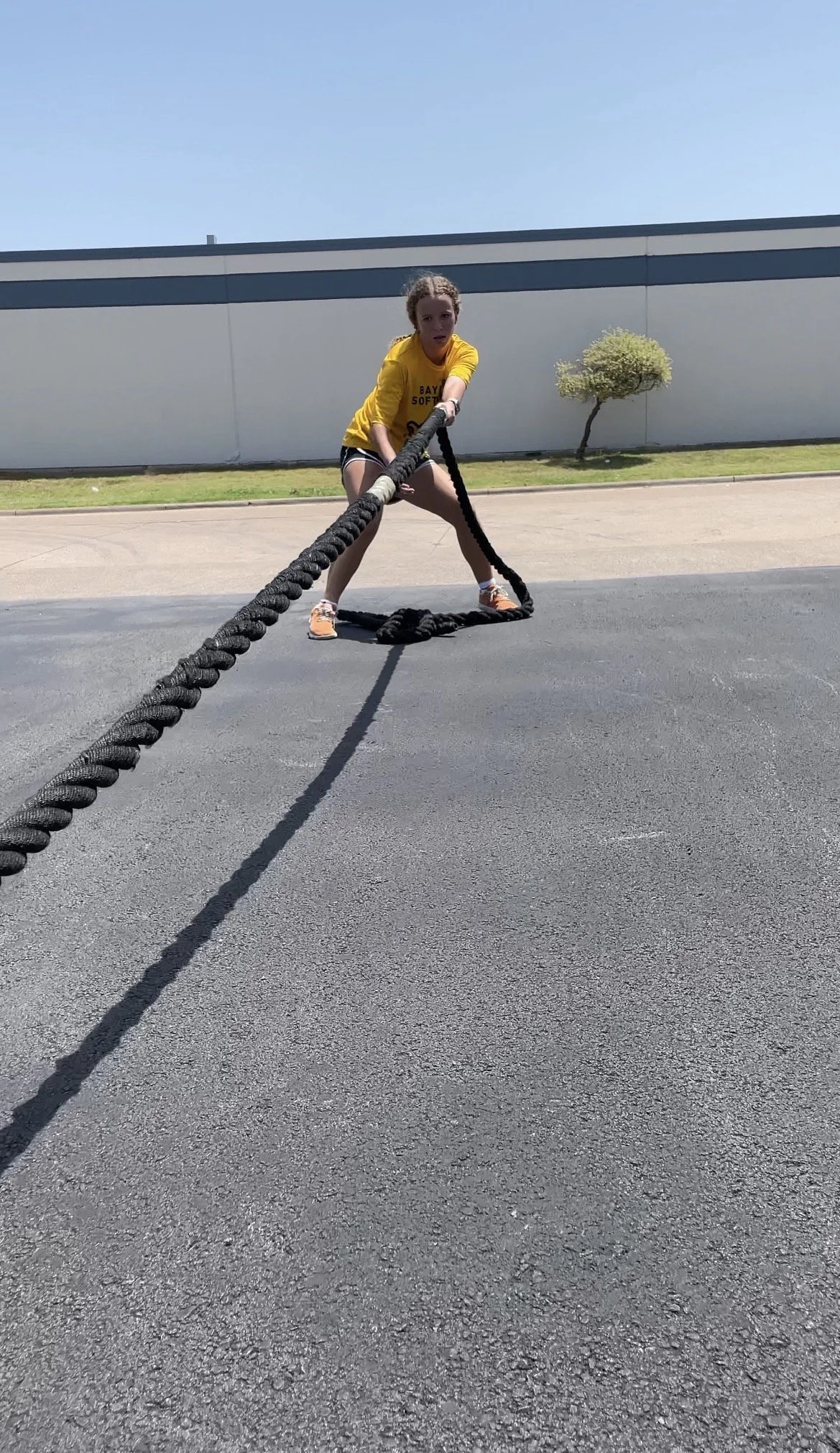
Looking for Teen Volleyball Performance Training in Grand Prairie, TX?
Volleyball is much more than hitting a ball over a net.
A competitive volleyball player may repeatedly accelerate, stop, shuffle, jump, land, react, reach overhead and change direction throughout practices and matches. Technical volleyball skills such as serving, setting, passing, blocking and attacking require volleyball-specific coaching, but there is another side of developing a young player: building the athlete who performs those skills.
That's where sports performance training comes in.
For teen volleyball players in Grand Prairie and the surrounding Dallas-Fort Worth area, training outside regular volleyball practice can focus on general physical qualities including strength, jumping ability, acceleration, agility, coordination, balance and body control.
Research supports several of these training approaches. Systematic reviews of volleyball players have found that plyometric training can improve vertical-jump performance and may also benefit other physical-performance measures. Research specifically examining adolescent female team-sport athletes also supports appropriately programmed strength and plyometric training for qualities relevant to court sports.
At Amped Obstacles in Grand Prairie, teens can experience a different approach to athletic development through coach-led obstacle-course and functional training.
It isn't volleyball practice.
It's training the athlete behind the volleyball player.
What Physical Abilities Matter for Volleyball Players?
Volleyball is an explosive, intermittent sport. During a rally, an athlete may have only seconds to recognize what's happening, move into position and execute the appropriate skill.
A front-row player may need to move laterally along the net before jumping to block. An outside hitter may transition from defense into an approach before producing an explosive jump. A libero may need to react and change direction quickly to reach a ball.
This creates several physical qualities worth developing alongside volleyball-specific skills.
Lower-Body Strength
Strong legs provide part of the physical foundation for athletic movement. Squatting, lunging, accelerating, decelerating, jumping and landing all require the lower body to produce or control force.
Strength doesn't automatically make someone a better volleyball player, but appropriately designed resistance training can contribute to broader athletic development in adolescents.
Explosive Power
Volleyball players jump frequently.
Outside hitters want to attack from a strong position. Middle blockers need to get above the net quickly. Setters may jump set, and defensive players can also benefit from explosive movement.
This is why jump and plyometric training receive so much attention in volleyball performance research.
Agility and Change of Direction
Volleyball isn't played in a straight line.
Athletes move forward, backward and laterally while constantly adjusting their position in response to the ball and other players.
General change-of-direction training can help develop the physical ability to accelerate, decelerate and redirect movement efficiently. Volleyball practice then teaches athletes how to apply those abilities within the actual sport.
Balance and Body Control
Jumping is only half of the equation.
You also have to land.
Teen athletes should learn to control their bodies during jumping, landing, deceleration and other athletic movements rather than focusing exclusively on how high or fast they can move.
Coordination
Volleyball demands coordination between the eyes, hands, feet and entire body. Obstacle training adds different coordination problems by requiring athletes to navigate changing physical challenges.
Upper-Body and Grip Strength
Volleyball itself does not require Ninja Warrior-style grip strength, so we wouldn't claim hanging from obstacles directly improves a player's serve or spike.
What it does provide is another form of upper-body and bodyweight training. Pulling, hanging, carrying and supporting the body can contribute to a more varied general strength program.

Does Strength Training Make Sense for Teen Volleyball Players?
Yes, when it is appropriately designed and supervised.
The old idea that adolescents should simply avoid resistance training isn't consistent with modern sports-science guidance. Consensus and position statements on youth resistance training support appropriately prescribed resistance exercise for children and adolescents.
The key words are appropriate and supervised.
Teen training shouldn't simply copy an advanced adult bodybuilding program. Exercise selection, resistance, volume, technique and progression should reflect the athlete's developmental level and training experience.
The objective for a teen volleyball athlete is not necessarily to lift the heaviest weight possible.
It's to become a more capable athlete.
Why Plyometric Training Matters for Volleyball
If there is one type of supplemental training with particularly obvious relevance to volleyball, it's plyometric training.
Plyometrics include explosive movements such as jumps, hops and bounds that train the athlete to rapidly produce force.
A systematic review examining plyometric training in volleyball players found evidence of improvements in vertical jump performance, with potential improvements reported in strength, horizontal jumping and agility/speed as well.
A separate meta-analysis of plyometric jump training involving volleyball players found improvements across several measures, including countermovement jump, spike jump and linear sprint performance.
More recent research in adolescent athletes continues to support the usefulness of plyometric training for jumping, sprinting and agility-related performance.
That doesn't mean teenagers should simply perform hundreds of jumps.
Quality matters. Progression matters. Landing mechanics matter. Training load matters.
More isn't automatically better.
Exercises Teen Volleyball Players Can Use for Athletic Development
A volleyball performance program should reflect the athlete's age, experience, current volleyball workload and individual needs. These examples are therefore training categories rather than a personalized prescription.
Squats
Squat variations can help develop lower-body strength.
Depending on experience and coaching, an athlete might progress through bodyweight squats, goblet squats and other loaded variations.
The emphasis should be on quality movement and appropriate progression rather than chasing maximum weight.
Split Squats
Volleyball players spend considerable time moving and producing force from different positions. Split squats provide a unilateral-biased lower-body strength exercise and can be progressed as athletes develop competency.
Reverse Lunges
Reverse lunges are another way to train the lower body while challenging control in a staggered stance.
They can be performed initially with bodyweight and progressively loaded when appropriate.
Romanian Deadlifts
Properly coached hip-hinge movements such as Romanian deadlifts can help athletes train the posterior chain.
Technique should come first, particularly with younger or inexperienced lifters.
Calf Raises
The calf complex contributes to running and jumping actions. Straight-leg and bent-knee calf-raise variations can be incorporated as part of a broader lower-body program.
Countermovement Jumps
A countermovement jump teaches athletes to rapidly transition from lowering into an explosive vertical movement.
Rather than turning every session into a maximum-jump contest, athletes can focus on high-quality repetitions and consistent mechanics.
Squat Jumps
Squat jumps are another straightforward explosive exercise that can be introduced when appropriate.
The goal is quality power production rather than accumulating excessive repetitions.
Broad Jumps
Not every volleyball movement is purely vertical. Broad jumps challenge horizontal force production and require athletes to control the landing.
Lateral Bounds
Volleyball requires substantial lateral movement. Lateral bounds can challenge side-to-side power and landing control.
Pogo Jumps
Low-amplitude pogo variations can introduce quicker elastic jumping actions. As with other plyometrics, progression should match the athlete's training experience.
Snap-Downs and Landing Drills
Athletes shouldn't only practice getting off the ground.
They should practice coming back down.
Landing drills can emphasize body position, control and the ability to absorb force before progressing toward more demanding jump combinations.
Lateral Shuffle Drills
Shuffle variations allow athletes to practice lateral movement mechanics without needing to turn every drill into volleyball practice.
Short Acceleration Sprints
Volleyball players generally operate within a relatively small court, making short acceleration ability more relevant than simply training long-distance sprint speed.
Short, high-quality acceleration drills can therefore fit into general athletic preparation.
Change-of-Direction Drills
Cone drills and reactive change-of-direction exercises can challenge an athlete's ability to stop, reposition and accelerate again.
Planned drills can establish mechanics before increasingly reactive activities are introduced.
Push-Ups
Push-ups provide an accessible upper-body strength exercise that can be scaled to an athlete's ability.
Rows
Row variations can train upper-back and pulling strength and complement pressing movements within a balanced resistance program.
Planks, Carries and Anti-Rotation Exercises
Rather than treating "core training" as endless crunches, athletes can use exercises that require them to maintain body position while resisting movement or carrying a load.
What Could a Teen Volleyball Performance Workout Look Like?
A general athletic-development session might begin with a dynamic warm-up and movement preparation before progressing into jumping and landing work while the athlete is fresh.
The strength portion could include a squat or split-squat variation, a hip-hinge exercise and appropriately selected upper-body movements. The athlete could then perform a limited amount of high-quality agility or change-of-direction work, followed by accessory strength or trunk exercises.
For example, an appropriately prepared athlete might perform exercises from a session containing:
Dynamic warm-up and movement preparation
Snap-down landing practice
Countermovement jumps
Lateral bounds
Goblet squats
Romanian deadlifts
Split squats
Rows
Push-ups
Farmer carries
Short acceleration drills
Lateral change-of-direction work
That is an example framework, not a universal workout for every teenager. Training should be adjusted around the athlete's age, experience, volleyball practices, matches, recovery and individual needs.
A teen who already has five demanding volleyball sessions that week shouldn't automatically pile a massive lower-body workout on top of them.
Don't Just Train More. Train With a Purpose.
One mistake competitive young athletes can make is assuming that more training always produces better results.
Volleyball practice Monday. Strength training Tuesday. Volleyball Wednesday. Private lesson Thursday. Tournament Friday through Sunday. Then repeat.
Eventually, "dedication" can become simply accumulating fatigue.
Supplemental performance training should complement the athlete's volleyball schedule rather than compete with it.
During a heavy competition period, training volume may need to decrease. During an offseason or lower-volume period, there may be more opportunity to develop strength and other physical qualities.
Sleep, nutrition and recovery remain part of athletic performance too.
Why Train at Amped Obstacles?
This is where Amped offers teen volleyball players something different from another volleyball lesson.
Amped Obstacles - Grand Prairie is a coach-led obstacle training facility in Grand Prairie where teens can encounter movement challenges involving climbing, jumping, balancing, hanging, swinging, coordination and functional strength.
A volleyball player already spends hours on the court.
Another hour of touching a volleyball may be useful when the goal is improving volleyball technique, but supplemental athletic development can serve a different purpose.
At Amped, the athlete can be challenged outside the context of their normal sport.
1. Training Becomes a Physical Problem to Solve
Traditional exercises are useful, but obstacle training adds another dimension.
An athlete may have to generate momentum, control their body, coordinate their hands and feet, balance on an unfamiliar surface or determine the most efficient way through a sequence.
That makes the athlete interact with their environment rather than simply repeat a predetermined movement.
2. Balance Is Built Into the Environment
Balance isn't limited to standing on one leg.
Obstacle courses can require athletes to maintain control while moving across different surfaces, changing direction and transitioning between challenges.
For teen athletes, that provides a different movement experience than court practice.
3. Upper-Body Training Doesn't Have to Feel Like a Traditional Workout
Hanging, climbing and swinging can challenge grip, upper-body strength and muscular endurance while giving athletes a specific task to accomplish.
Instead of simply counting repetitions, the athlete has an obstacle to solve.
4. Jumping and Landing Can Be Applied in Different Ways
Volleyball athletes already jump frequently, so supplemental training needs to account for total jumping volume.
When appropriate, obstacle training can expose athletes to different jumping and landing problems rather than simply adding more repetitive maximum vertical jumps.
5. Coordination Is Constantly Challenged
Obstacle courses don't always allow athletes to repeat exactly the same movement.
They may need to transition from running to jumping, from jumping to balancing, or from hanging to landing.
That creates an environment where coordination and body control matter.
6. Athletes Can Develop Outside Their Primary Sport
A teenager doesn't have to spend every athletic hour playing volleyball.
A volleyball player is still an athlete.
Developing a broad movement foundation can give teenagers opportunities to become stronger and more physically capable while also giving them a mental change from their primary sport.
7. It's Actually Fun
This matters more than adults sometimes acknowledge.
Consistency is much easier when an athlete enjoys training.
Obstacle training creates clear challenges and immediate goals. An athlete sees an obstacle, attempts it, receives coaching, adjusts and tries again.
Progress is tangible.
That can turn conditioning into something the athlete actually wants to attend.
Is Amped Obstacles a Volleyball Training Facility?
No, and that's an important distinction.
Amped Obstacles does not replace volleyball coaching.
If your teen needs help with serving mechanics, setting technique, passing, blocking strategy or hitting technique, they need qualified volleyball-specific instruction.
Amped fills a different role.
We provide an environment where athletes can work on general athletic development, functional strength, obstacle skills, coordination, balance, body control and overall physical capability.
For a volleyball player, the combination can look like this:
Volleyball practice develops the volleyball player.
Supplemental athletic training develops the athlete.
You need both pieces to serve their intended purpose.
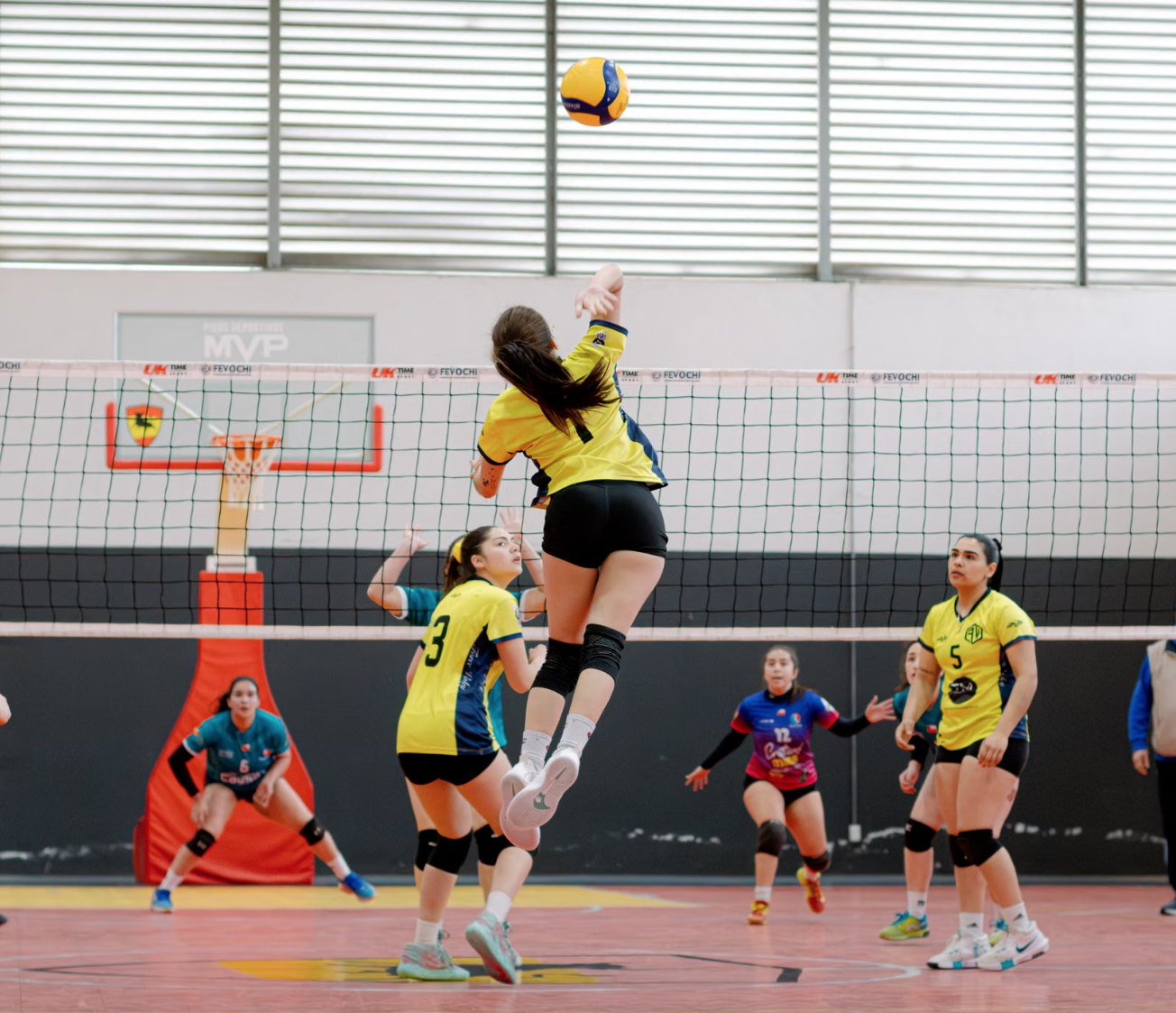
Teen Volleyball Players Don't Need to Be Ninja Warriors
A volleyball athlete doesn't need obstacle-course experience before taking a class at Amped.
They also don't need to be able to complete every obstacle immediately.
That's the point of training.
An athlete encounters something difficult, learns an appropriate progression, practices it and develops the physical ability and technique necessary to improve.
That process should sound familiar to any volleyball player who remembers learning to serve, set or attack.
Athletic development takes repetition.
Volleyball Performance Training for Grand Prairie and DFW Athletes
Amped Obstacles is located in Grand Prairie, making it an option for teen athletes throughout the surrounding Dallas-Fort Worth area.
Families searching for teen volleyball performance training in Grand Prairie, volleyball strength training, volleyball jump training, youth athletic development or sports performance training can use Amped classes as a different type of supplemental training experience.
Athletes from Grand Prairie, Arlington, Mansfield, Irving and surrounding communities can incorporate obstacle and functional training alongside their primary sport when their overall schedule allows.
Frequently Asked Questions About Teen Volleyball Performance Training
Should teen volleyball players lift weights?
Appropriately designed and supervised resistance training is supported by major youth strength and conditioning position statements. The program should reflect the teenager's developmental level, experience, technique and overall training demands.
What exercises help volleyball players jump higher?
Plyometric exercises such as countermovement jumps, squat jumps and other appropriately progressed jump variations are commonly used alongside resistance training. Research in volleyball players supports plyometric jump training for improving vertical-jump performance.
Should volleyball players train agility?
Volleyball requires frequent positioning and direction changes. General change-of-direction and agility training can therefore form part of athletic development, while volleyball practice teaches athletes to apply movement skills to actual game situations.
Are squats good for teen volleyball players?
Squat variations can be useful lower-body resistance exercises when appropriately selected and coached. The specific variation and resistance should match the athlete's experience and ability.
Can volleyball players do Ninja Warrior training?
Yes. Ninja Warrior training provides a different athletic environment involving climbing, hanging, balancing, jumping and obstacle navigation. It shouldn't replace volleyball-specific coaching, but it can provide supplemental general athletic training.
Does obstacle training automatically improve volleyball performance?
No. There isn't sufficient evidence to claim that taking an obstacle-course class will automatically improve volleyball performance. Amped should be viewed as a supplemental athletic-development environment rather than volleyball-specific training.
Build the Athlete Behind the Volleyball Player
A better volleyball player needs volleyball skills.
But a young athlete can also work toward becoming stronger, more explosive, coordinated and physically capable.
Those goals don't require teenagers to spend every training session on a volleyball court.
Give them opportunities to move differently.
Challenge their strength.
Challenge their balance.
Teach them to control their bodies.
Give them problems to solve.
Let them experience what being an athlete looks like outside their primary sport.
Then let volleyball practice take care of volleyball.
Teen Volleyball Athletes: Book a Class at Amped Obstacles
If you're searching for teen volleyball performance training in Grand Prairie, TX, give your athlete an opportunity to experience a completely different kind of supplemental training.
At Amped Obstacles, teen athletes can run, jump, climb, swing, hang, balance and tackle progressive obstacle challenges in a coach-led training environment.
Whether your teen plays school volleyball, club volleyball or is preparing for upcoming tryouts, Amped classes can add another dimension to their overall athletic development.
Don't wait until the next tryout to start working on the athlete behind the jersey.
Book your teen's class at Amped Obstacles and start training this Fall.
Amped Obstacles
2626 Aero Dr.
Grand Prairie, TX 75052
Fall 2026 classes are enrolling now. Reserve your teen's class and come experience obstacle-based athletic training in Grand Prairie.
Article Excerpt
Looking for teen volleyball performance training in Grand Prairie, TX? Volleyball athletes need more than sport-specific skills. Strength, jumping ability, agility, balance, coordination and body control can all contribute to overall athletic development. Learn which exercises teen volleyball athletes can incorporate into appropriately designed performance training and discover how coach-led Ninja Warrior and obstacle training at Amped Obstacles can give young athletes a completely different physical challenge alongside volleyball.
Scientific Literature
Silva AF, Clemente FM, Lima R, Nikolaidis PT, Rosemann T, Knechtle B. The Effect of Plyometric Training in Volleyball Players: A Systematic Review. International Journal of Environmental Research and Public Health. 2019;16(16):2960. The review included 21 studies and reported evidence supporting improvements in vertical jumping, with potential benefits for strength, horizontal jumping and agility/speed.
Ramirez-Campillo R, et al. Effects of Plyometric Jump Training on Vertical Jump Height of Volleyball Players: A Systematic Review with Meta-Analysis of Randomized-Controlled Trials. Journal of Sports Science & Medicine. 2020. The analysis examined randomized controlled research on plyometric jump training and volleyball vertical-jump performance.
Ramirez-Campillo R, et al. Effects of Plyometric Jump Training on Physical Fitness in Amateur and Professional Volleyball: A Meta-Analysis. Frontiers in Physiology. 2021. Across 18 eligible studies involving 746 volleyball athletes, plyometric jump training produced improvements in several performance outcomes including sprint speed and multiple jump measures, including spike jump height.
Yuan S, Chai Y, Tan Z, et al. The effects of plyometric training on adolescent sports performance: a systematic review and meta-analysis. PeerJ. 2026;14:e21585. The review included 63 studies and found significant improvements in adolescent jumping, sprinting and agility performance following plyometric training.
Zeng Z, Zhang P, Zhou C, et al. Effects of plyometric training on strength, explosive performance, and agility in female team-sport athletes: a systematic review and three-level meta-analysis. Frontiers in Physiology. 2026. The analysis included 36 studies involving 921 participants and found improvements in several outcomes, including jumping, sprinting and agility, while noting that effects varied by outcome and certainty of evidence.
Faigenbaum AD, Kraemer WJ, Blimkie CJR, et al. Youth resistance training: updated position statement paper from the National Strength and Conditioning Association. Journal of Strength and Conditioning Research. 2009;23(5 Suppl):S60-S79. The NSCA position statement supports appropriately prescribed and supervised resistance training for children and adolescents.
Lloyd RS, Faigenbaum AD, Stone MH, et al. Position statement on youth resistance training: the 2014 International Consensus. British Journal of Sports Medicine. 2014;48(7):498-505. The international consensus statement provides evidence-based guidance regarding appropriately designed youth resistance training.
Relevant Articles:
What Classes Do You Have to Take for Early Childhood Development? (Grand Prairie, TX Guide)
Best After School Activities in Grand Prairie, TX (2026 Parent Guide)
Services at Amped Obstacles:
⭐️Ninja Warrior Classes (Kids, Teens, Adults)
⭐️Corporate/ Team Building Events
⭐️HYPERVOLT Percussion Massage Therapy & Recovery Sessions
⭐️Adult Obstacle Course Private Training
Location
2626 Aero Dr, Grand Prairie, TX 75052
We’re just minutes from major attractions and rapidly growing developments, including:
EpicCentral
Epic Waters Indoor Waterpark
The Epic Recreation Center
Bolder Adventure Park
Grand Prairie Premium Outlets
Topgolf Grand Prairie
The Landing by Tiffany Derry
Asia Times Square
This puts Amped Obstacles right alongside some of the most popular destinations families are already visiting, making it a perfect stop for a full day of fun and activity.

