Ninja Warrior Arena Vs Trampoline Park? What you need to know based on your needs

When comparing a Ninja Warrior arena vs trampoline park, the right choice depends on your goals, fitness level, age group, and the type of physical development you want to prioritize. Both environments offer high-energy physical activity, but they differ significantly in movement patterns, injury risk profiles, strength demands, and overall athletic benefits. Understanding these differences can help parents, athletes, and fitness enthusiasts choose the best option for performance, fun, and long-term physical development.

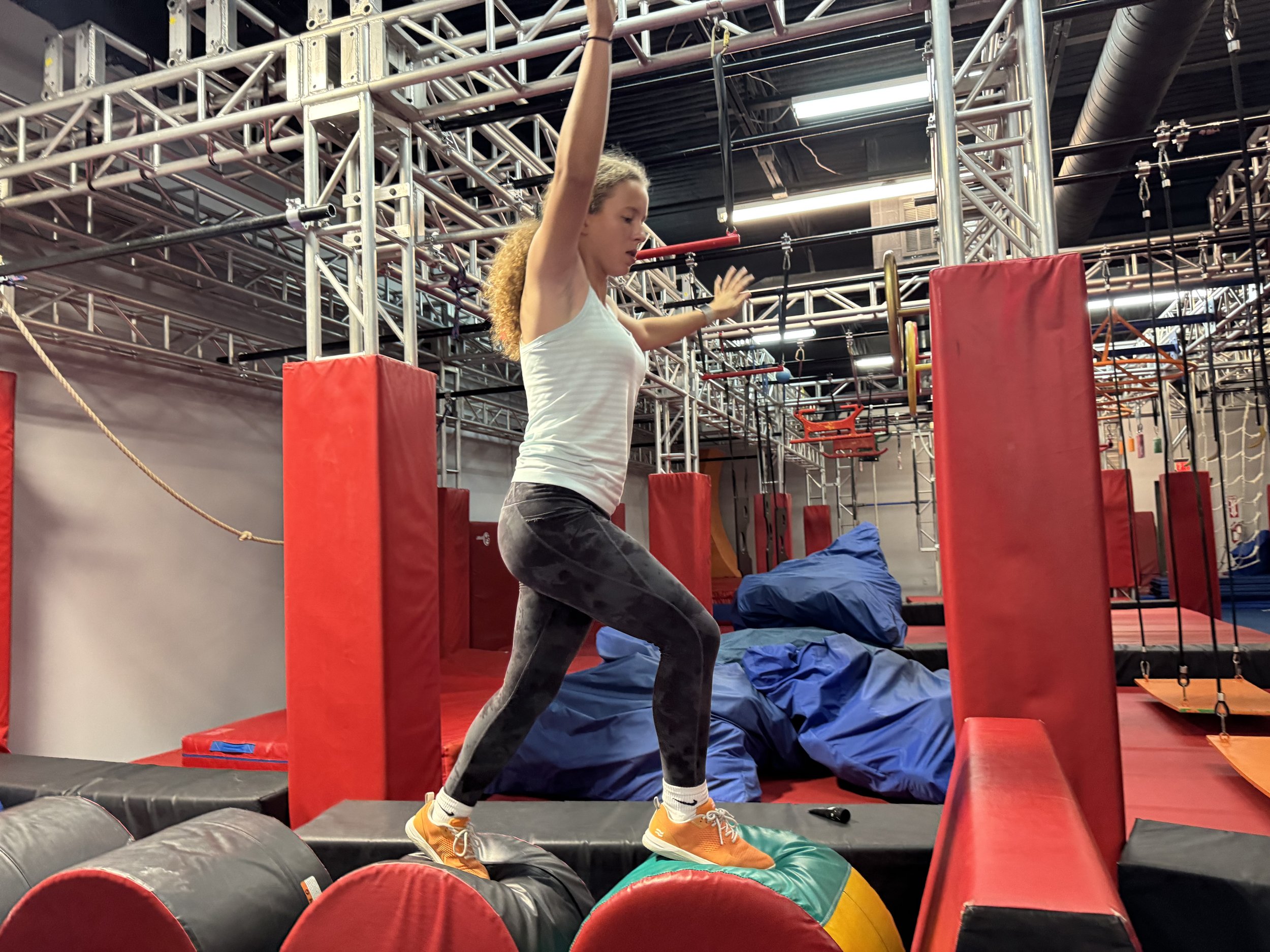


A Ninja Warrior arena focuses on functional movement, strength, coordination, grip endurance, balance, and obstacle-based problem solving. These environments typically include climbing walls, warped walls, monkey bars, rope swings, balance beams, cargo nets, and grip-intensive challenges. This type of training closely mimics real-world athletic movement and is often used in youth athletic development programs because it builds full-body strength and neuromuscular coordination. It also requires controlled movement, body awareness, and progressive skill development, which can translate into improved performance in sports like football, gymnastics, wrestling, and track and field.
A trampoline park focuses primarily on repetitive jumping, bouncing, and aerial movement patterns. While trampoline parks can improve cardiovascular endurance, basic leg power, and enjoyment of movement, the activity is more elastic and less structured in terms of skill progression. Most movements rely on reactive jumping and air control rather than controlled strength-based obstacle navigation. This makes trampoline parks highly engaging for casual recreation, but less targeted for structured athletic development compared to obstacle-based training environments.
From a fitness development perspective, Ninja Warrior arenas tend to emphasize strength, grip endurance, coordination, and functional movement efficiency. Children and adults are challenged to climb, hang, swing, and stabilize their bodies through variable obstacles, which recruits multiple muscle groups simultaneously and improves proprioception. Trampoline parks, on the other hand, emphasize plyometric activity, bounce repetition, and short bursts of cardiovascular output, with less emphasis on upper body strength or grip development.
Injury risk is an important consideration when comparing Ninja Warrior arenas vs trampoline parks. Research has shown that trampoline parks can carry a higher incidence of lower extremity injuries such as sprains and fractures, particularly in unsupervised or overcrowded environments. Ninja Warrior arenas also carry risk due to height and obstacle complexity, but structured progression, grip-based control, and supervised obstacle design can help reduce uncontrolled impact forces. In both environments, proper supervision, age-appropriate zones, and safety instruction are critical for reducing injury risk.
For children, Ninja Warrior arenas often provide more developmental benefits because they support motor planning, bilateral coordination, core stability, and progressive strength building. These skills are foundational for long-term athletic performance and physical literacy. Trampoline parks can still be beneficial for enjoyment, confidence building, and general physical activity, but they are typically less structured in developing full-body functional strength and controlled movement mechanics.
For adults, the choice depends on training goals. If the focus is calorie burn, fun cardio, and light recreational movement, trampoline parks may be appealing. If the goal is strength, obstacle racing preparation, functional fitness, or athletic conditioning, Ninja Warrior arenas provide a more complete training stimulus that closely aligns with real-world performance demands.
Ultimately, the best option depends on whether the priority is structured athletic development or recreational bouncing activity. Both have value, but they serve different purposes in physical fitness and movement education.
If you want a training environment that builds real strength, agility, grip endurance, and full-body athletic performance in a safe and structured way, visit Amped Obstacles. Our Ninja Warrior-style obstacle courses are designed for kids, teens, and adults to develop real-world athletic ability through progressive, guided challenges that build confidence and physical capability. Book a session today and experience obstacle training that goes beyond play and into true performance development.
Scientific references (used for injury risk and youth physical development insights):
American Academy of Pediatrics (AAP), trampoline safety and pediatric injury prevention guidance
Centers for Disease Control and Prevention (CDC), physical activity guidelines for children and adolescents
British Journal of Sports Medicine, analysis of recreational trampoline injury patterns and mechanisms
Journal of Sports Science & Medicine, effects of obstacle-based training on coordination and functional strength
Pediatrics (AAP journal), motor development, proprioception, and youth athletic skill acquisition
Services at Amped Obstacles:
⭐️Ninja Warrior Classes (Kids, Teens, Adults)
⭐️Corporate/ Team Building Events
Location
2626 Aero Dr, Grand Prairie, TX 75052
We’re just minutes from major attractions and rapidly growing developments, including:
EpicCentral
Epic Waters Indoor Waterpark
The Epic Recreation Center
Bolder Adventure Park
Grand Prairie Premium Outlets
Topgolf Grand Prairie
The Landing by Tiffany Derry
Asia Times Square
This puts Amped Obstacles right alongside some of the most popular destinations families are already visiting, making it a perfect stop for a full day of fun and activity.
