Percussion Therapy Massage & Recovery in Grand Prairie, TX
A Modern, Targeted Approach to Muscle Recovery at Amped Obstacles
Training hard is only part of becoming stronger.
Your body also needs time, sleep, hydration, nutrition, and intentional recovery between workouts. Whether you lift weights, run, participate in recreational sports, train for HYROX or Spartan Race, work a physically demanding job, or simply experience everyday muscle tightness, a structured recovery routine can help you feel more prepared for your next activity.
At Amped Obstacles in Grand Prairie, Texas, our Percussion Therapy Massage & Recovery sessions use Hypervolt percussion technology to provide targeted attention to commonly tight or fatigued muscle groups.
The service is designed for active adults, athletes, busy professionals, parents, first responders, healthcare workers, and anyone seeking a convenient recovery-focused experience in Grand Prairie.
If you have been searching for:
Percussion therapy massage in Grand Prairie, TX
Hypervolt recovery massage near me
Sports recovery in Grand Prairie
Massage for sore muscles
Post-workout recovery near Arlington
Massage gun therapy in DFW
Athletic recovery services
Muscle recovery massage near me
Amped Obstacles offers a focused recovery option designed to complement an active lifestyle.
What Is Percussion Therapy Massage?
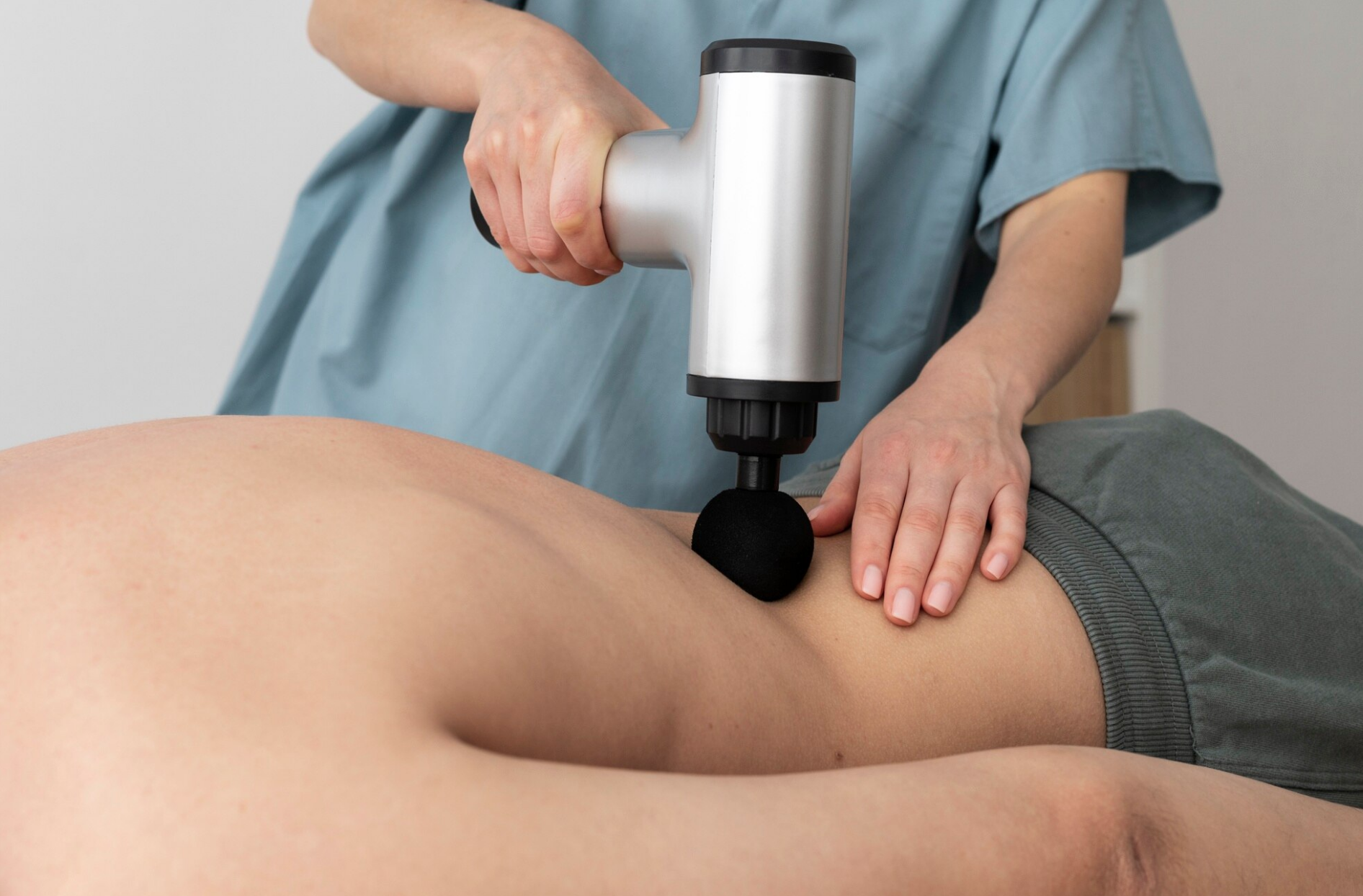
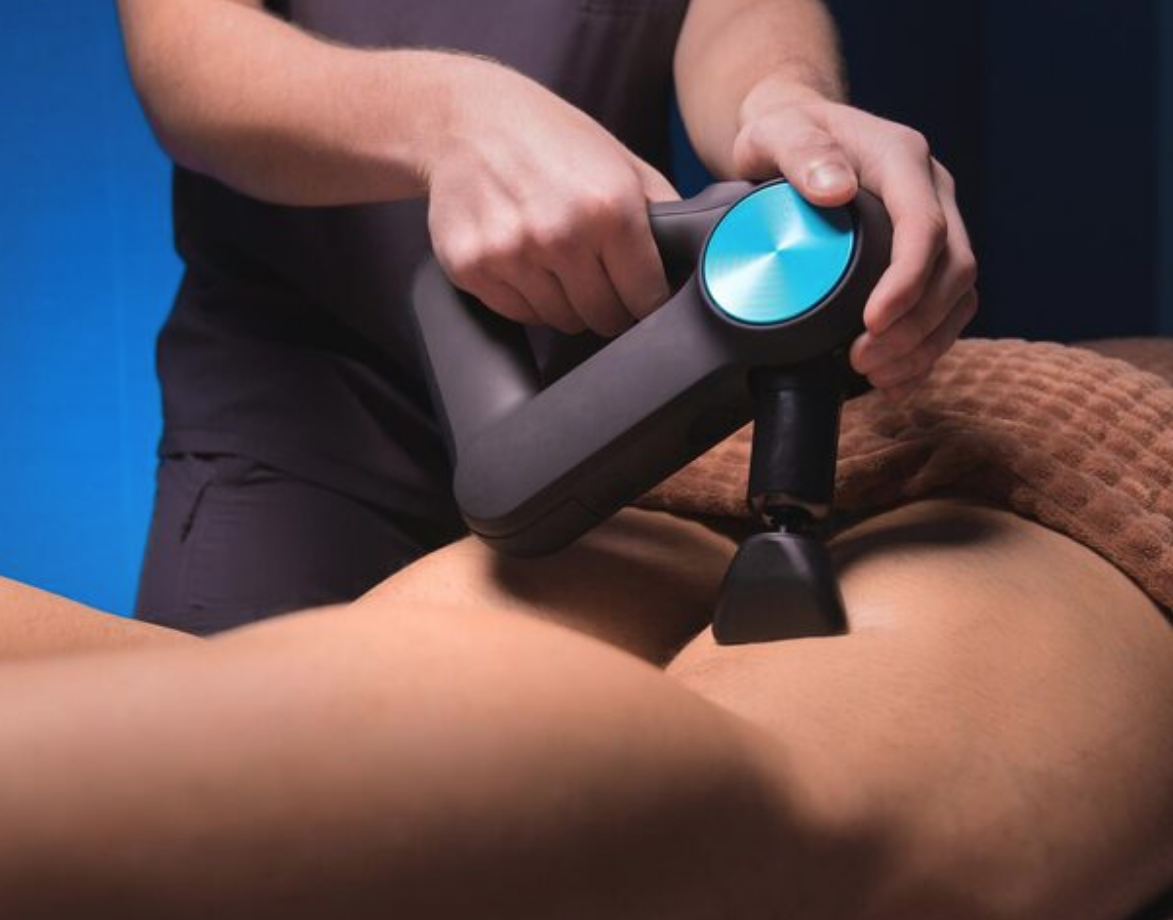
Percussion therapy uses a handheld device that applies rapid, repeated mechanical pulses to targeted soft-tissue areas.
The Hypervolt device used during a session can be adjusted through different speeds and attachments depending on the muscle group, the client’s comfort, and the purpose of the session.
Unlike a traditional hands-only massage, percussion therapy uses consistent mechanical stimulation. Sessions can focus on specific areas such as the:
Shoulders
Upper back
Lower back musculature
Glutes
Quadriceps
Hamstrings
Calves
Forearms
Percussion therapy is commonly used before exercise as part of a warm-up or after activity as part of a broader recovery routine. Current research suggests that massage guns may provide short-term improvements in flexibility and range of motion, although findings related to soreness, performance, and recovery remain mixed.
Is Percussion Therapy the Same as Traditional Massage?
Not exactly.
Traditional massage generally involves hands-on techniques such as pressure, kneading, gliding, compression, or stretching. Percussion therapy relies primarily on rapid mechanical pulses delivered by a handheld device.
Both may be used within a wellness or exercise-recovery routine, but the experience is different.
Traditional massage may emphasize:
Hands-on pressure
Broad relaxation
Manual soft-tissue techniques
Longer work across multiple areas
Percussion therapy may emphasize:
Targeted muscle groups
Adjustable speed and intensity
Shorter, focused applications
Pre-workout or post-workout routines
Consistent mechanical stimulation
At Amped Obstacles, our service is centered on targeted percussion-based recovery, not the diagnosis or treatment of an injury.
What Does a Percussion Therapy Session Feel Like?
Most clients describe percussion therapy as a rapid tapping or pulsing sensation.
The pressure should feel controlled and tolerable rather than sharp or painful. Intensity can be adjusted based on the area being addressed and the client’s comfort.
Larger muscle groups, such as the quadriceps and glutes, may tolerate a different attachment or intensity than smaller or more sensitive areas.
A well-managed session should avoid:
Direct application over bones
The front or side of the neck
Open wounds
Acutely injured areas
Significant swelling
Areas with unexplained severe pain
Regions where a medical professional has advised against massage or vibration
Clients should communicate immediately if a sensation feels painful, numb, unusually intense, or uncomfortable.
Potential Benefit No. 1: Short-Term Range of Motion and Flexibility
One of the more consistent findings in massage-gun research involves short-term mobility.
Systematic reviews have reported that percussion therapy may temporarily improve flexibility or joint range of motion. These effects may make percussion work useful as one component of a warm-up or mobility routine, particularly when it does not replace active movement preparation.
For example, an athlete may use a recovery session to focus on tight-feeling calves, hamstrings, or quadriceps before returning to training.
That does not mean percussion therapy permanently increases flexibility or corrects the underlying cause of restricted movement. It may, however, help some people feel more comfortable moving in the short term.
Potential Benefit No. 2: Temporary Relief From Muscle Tightness
Many clients seek percussion therapy because their muscles feel tight after:
Strength training
Running
Long work shifts
Travel
Repetitive activity
Obstacle training
Recreational sports
Sitting for extended periods
Percussion massage may provide a temporary feeling of relaxation or reduced muscle tension. Reviews of the evidence have also reported possible reductions in perceived musculoskeletal discomfort, although outcomes vary and the quality of research is still developing.
This distinction matters.
A recovery session may help you feel better temporarily, but it should not be presented as a cure for an injury, chronic pain condition, or underlying medical problem.
Potential Benefit No. 3: Support for Post-Workout Recovery
Delayed-onset muscle soreness, often called DOMS, commonly appears after unfamiliar or demanding exercise.
Some studies and reviews suggest massage-based recovery strategies can reduce the perception of post-exercise soreness. A 2025 randomized trial found favorable outcomes from percussion massage in physically active young men experiencing exercise-induced soreness. However, another 2025 study found that percussion massage did not accelerate neuromuscular recovery after damaging eccentric exercise.
The responsible conclusion is that percussion therapy may help some clients feel less sore or more comfortable, but it should not be described as guaranteed to speed tissue repair or restore performance.
Recovery results depend on many factors, including:
Training intensity
Sleep
Nutrition
Hydration
Fitness level
Injury status
Stress
Time between workouts
Percussion therapy is best treated as one optional part of that larger recovery plan.
Potential Benefit No. 4: A Focused Pre-Workout Routine
Some athletes use massage guns briefly before exercise.
The purpose is generally to stimulate a muscle group, reduce the sensation of stiffness, and prepare mentally and physically for movement.
Research suggests percussion therapy may improve short-term range of motion without necessarily reducing muscle performance. However, results differ by application, muscle group, duration, and study design. Longer or overly aggressive use immediately before explosive activity may not be appropriate.
Percussion therapy should never replace a complete warm-up.
A well-designed warm-up should still include:
Gradual increases in movement
Dynamic mobility
Sport-specific practice
Progressive loading
Rehearsal of the movements you are about to perform
Who May Enjoy Percussion Therapy Massage?
You do not need to be a professional athlete.
Sessions may appeal to:
Active Adults
People who lift weights, run, cycle, attend fitness classes, play sports, or maintain physically active lifestyles may use percussion therapy as part of their weekly recovery routine.
Busy Professionals
Long periods of sitting, driving, standing, or working at a computer can leave muscles feeling stiff or fatigued.
Parents
Lifting children, managing busy schedules, and staying active with the family can place repeated demands on the body.
Runners
Runners frequently report tight-feeling calves, quadriceps, hamstrings, and glutes after training.
Functional Fitness Athletes
Functional fitness may involve carries, lunges, pulls, pushes, squats, jumping, and high-intensity conditioning.
HYROX Athletes
HYROX combines running with repeated functional workout stations, creating substantial demands on the legs, shoulders, back, and grip.
Spartan Race and OCR Competitors
Obstacle-course racing requires running, climbing, hanging, carrying, crawling, and pulling, often under fatigue.
Ninja Warrior Athletes
Ninja training places significant demands on the hands, forearms, shoulders, back, core, and hips.
Recreational Athletes
Softball, basketball, volleyball, tennis, soccer, dance, gymnastics, cheer, CrossFit-style training, Pilates, Lagree, and other activities all create different recovery demands.
Percussion Therapy for Runners in Grand Prairie
Running is repetitive by nature.
Depending on volume, terrain, footwear, training history, and recovery, runners may experience tightness or fatigue in the:
Calves
Quadriceps
Hamstrings
Glutes
Hip musculature
A focused percussion session may be used to support short-term mobility or comfort before or after a run.
It should not be used to mask sharp pain, alter running mechanics without assessment, or continue training through a suspected injury.
Persistent pain deserves evaluation from an appropriate licensed healthcare professional.
Percussion Therapy for HYROX Training
HYROX training repeatedly combines running with demanding functional stations.
Athletes may perform:
Sled pushes
Sled pulls
Burpee broad jumps
Rowing
Farmer’s carries
Sandbag lunges
Wall balls
This style of training can leave multiple muscle groups feeling fatigued.
Percussion therapy may fit into an athlete’s recovery plan by targeting areas that feel especially tight after training. It does not replace properly programmed rest days, progressive training, adequate sleep, or nutrition.
At Amped Obstacles, clients can combine their recovery routine with functional fitness or personal training in the same Grand Prairie location.
Percussion Therapy for Spartan Race and OCR Preparation
Obstacle races challenge much more than cardiovascular endurance.
Athletes need:
Grip strength
Pulling strength
Carry endurance
Running capacity
Shoulder stability
Core control
Lower-body strength
Obstacle technique
Because OCR training involves many different physical demands, athletes may experience fatigue throughout the body.
Targeted percussion sessions may be helpful when an athlete wants short-term attention on commonly used muscle groups between workouts.
The goal is not to replace training.
The goal is to support the athlete’s ability to continue following a sensible training plan.
Percussion Therapy for Adults Starting a New Fitness Program
Beginners often experience soreness when they introduce new exercises or return after a long break.
A recovery session may help make the process feel more manageable, but soreness should not be treated as proof that a workout was effective.
New participants should focus on:
Gradual increases in exercise
Appropriate technique
Rest between demanding sessions
Consistent hydration
Adequate protein and overall nutrition
Quality sleep
Listening to unusual pain signals
Percussion therapy can complement these habits, but it cannot compensate for doing too much too soon.
What Percussion Therapy Cannot Do
Honest recovery guidance matters.
Percussion therapy should not be marketed as a miracle treatment.
It cannot:
Diagnose an injury
Repair a torn muscle
Cure chronic pain
Replace physical therapy
Correct every mobility limitation
Guarantee faster recovery
Eliminate the need for rest
Replace strength or mobility training
Treat a medical condition
Guarantee improved athletic performance
A 2024 randomized investigation found little effect on ankle range of motion, calf swelling, isometric strength, or endurance after muscle-damaging exercise. Broader reviews also indicate that performance effects are inconsistent and that massage tends to influence perceived recovery or flexibility more reliably than objective athletic performance.
This is why Amped Obstacles presents percussion therapy as a recovery and wellness service, not medical treatment.
When Should You Avoid Percussion Therapy?
Percussion therapy may not be appropriate for every person or every situation.
Do not apply a massage gun directly to:
Broken skin
Fresh wounds
Bruised tissue
Suspected fractures
Acutely swollen areas
Varicose veins
Areas with reduced sensation
The front or side of the neck
Bony prominences
A recently injured area without medical clearance
Speak with a qualified healthcare professional before receiving percussion therapy if you:
Take blood-thinning medication
Have a bleeding disorder
Have a history of blood clots
Have neuropathy or reduced sensation
Recently had surgery
Have osteoporosis
Are pregnant
Have a cardiovascular or vascular condition
Have unexplained pain, swelling, weakness, or numbness
Are under active medical treatment for an injury
Seek medical attention rather than massage when pain is severe, sudden, worsening, associated with swelling or weakness, or follows a significant injury.
How Often Should You Schedule a Session?
There is no universal schedule.
The appropriate frequency depends on:
Your training volume
Your recovery needs
Your comfort
Your budget
Your health history
The length and intensity of each session
Whether you are preparing for an event
Some clients may choose an occasional session after a difficult training week. Others may include percussion therapy more regularly within a broader recovery routine.
More is not automatically better.
Repeated, aggressive application to an already irritated area can cause discomfort or bruising. Sessions should remain focused, tolerable, and appropriate for the individual.
Before or After a Workout?
Percussion therapy may be used in either setting, but the purpose changes.
Before exercise
A brief application may help an area feel less stiff and may support short-term range of motion. It should be followed by a dynamic, activity-specific warm-up.
After exercise
A post-workout session may emphasize relaxation, comfort, and perceived recovery.
On a recovery day
A focused session may be combined with light movement, hydration, nutrition, and sleep.
The ideal timing depends on your activity and how your body responds.
Why Book Percussion Therapy at Amped Obstacles?
Buying a massage gun is easy.
Knowing how much pressure to use, where to apply it, and when to stop can be less obvious.
At Amped Obstacles, sessions provide a structured recovery experience rather than asking you to reach awkward areas or guess your way through a routine at home.
Clients choose Amped Obstacles because we offer:
Targeted Hypervolt percussion sessions
Adjustable intensity
Recovery support for active lifestyles
Convenient Grand Prairie location
Services for members and nonmembers
Access to fitness and recovery in one facility
A locally owned, community-focused business
Our goal is to help you make recovery a purposeful part of your routine.
More Than Percussion Therapy
Amped Obstacles provides a connected approach to movement, fitness, and recovery.
Our adult services include:
Adult functional fitness classes
Beginner obstacle-course workouts
Adult Ninja Warrior training
Personal training
Athletic sports-performance coaching
Spartan Race and OCR preparation
HYROX-focused training
Open gym access when available
Percussion therapy and sports-recovery sessions
You can train, develop skills, and prioritize recovery in one Grand Prairie facility.
Percussion Therapy Massage Near Arlington, Irving, Mansfield, and Dallas
Amped Obstacles is located in Grand Prairie and serves clients throughout the DFW Metroplex, including:
Grand Prairie
Arlington
Irving
Mansfield
Cedar Hill
Duncanville
DeSoto
Dallas
Fort Worth
Midlothian
Euless
Bedford
Hurst
Clients searching for percussion massage near Arlington, sports recovery near Irving, or massage-gun therapy in DFW can schedule a convenient session at our Grand Prairie facility.
Frequently Asked Questions
What is percussion therapy massage?
Percussion therapy uses a handheld device that delivers rapid mechanical pulses to targeted muscle groups. It is commonly used within warm-up, mobility, relaxation, or post-workout recovery routines.
Is percussion therapy a real massage?
It is a form of mechanically delivered massage or soft-tissue stimulation, but it differs from traditional hands-on massage therapy. At Amped Obstacles, the service focuses specifically on Hypervolt percussion-based recovery.
Can percussion therapy reduce soreness?
Some studies suggest percussion massage may reduce perceived soreness, while other studies have found no meaningful acceleration of objective neuromuscular recovery. Individual responses vary.
Can it improve flexibility?
Systematic reviews suggest massage guns may provide short-term improvements in range of motion or flexibility for some muscle groups.
Does percussion therapy improve athletic performance?
Evidence is mixed. It should not be presented as a guaranteed way to increase strength, speed, balance, agility, or performance. Its more plausible uses involve short-term mobility, comfort, and perceived recovery.
Is it only for athletes?
No. Active adults, busy professionals, parents, and people with physically demanding routines may also enjoy focused recovery sessions.
Do I need to be a member?
No. Percussion Therapy Massage & Recovery sessions can be booked independently of an Amped Obstacles membership.
Can percussion therapy treat my injury?
No. Percussion therapy at Amped Obstacles is not medical care and is not intended to diagnose, treat, rehabilitate, or cure an injury. Consult an appropriate licensed healthcare professional for injury evaluation.
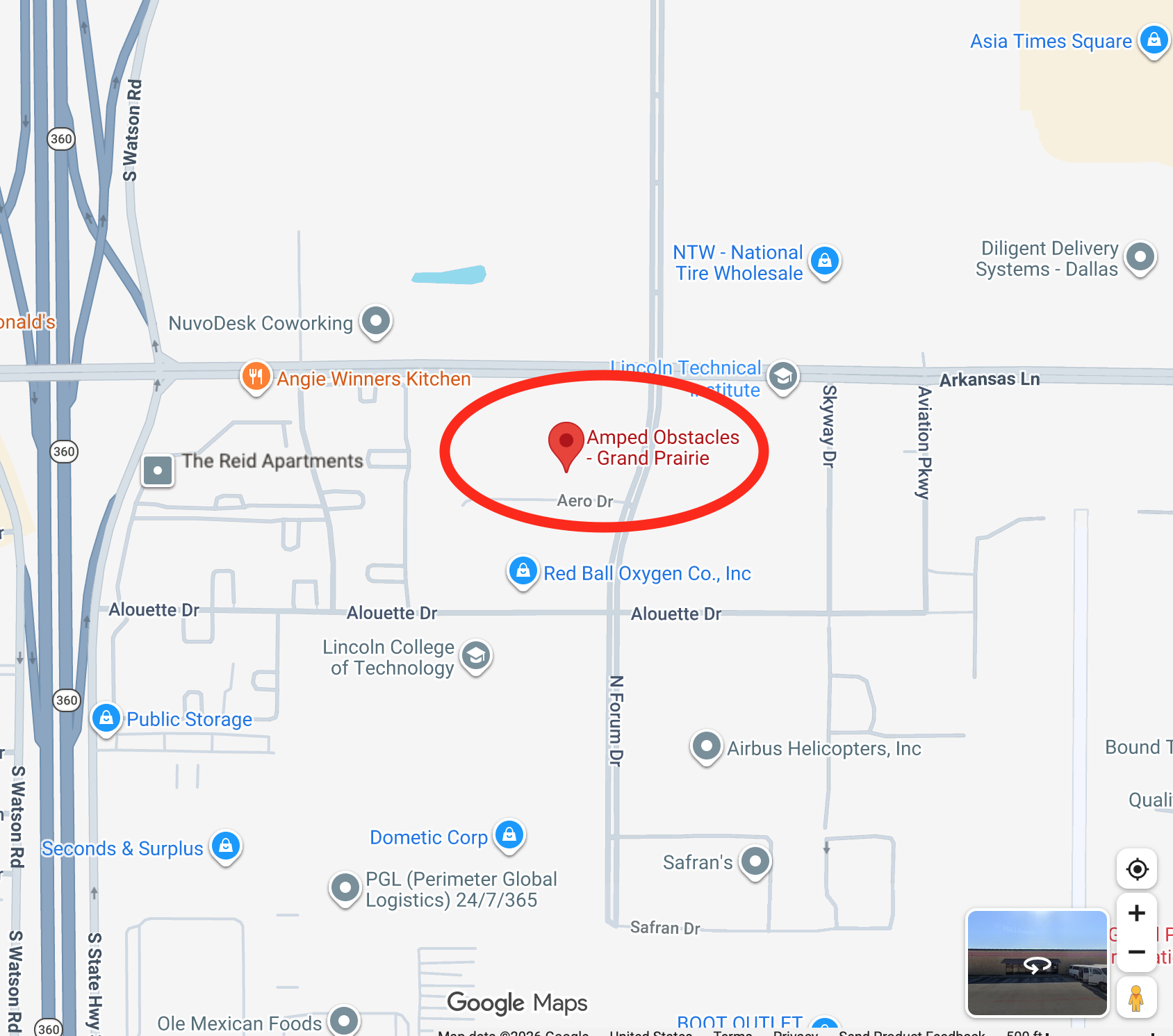
Where is Amped Obstacles located?
Amped Obstacles
2626 Aero Dr.
Grand Prairie, TX 75052
Prioritize Recovery Before Your Body Forces You To
Many people wait until their muscles feel extremely tight, their training quality drops, or soreness interferes with daily life before they begin thinking about recovery.
A better approach is to make recovery part of the plan from the beginning.
Percussion therapy is not a miracle solution, but it can provide a convenient, targeted experience for clients seeking short-term mobility, relaxation, or post-workout comfort.
At Amped Obstacles, we help active people in Grand Prairie build stronger routines by bringing training and recovery together in one supportive environment.
Book Percussion Therapy Massage & Recovery in Grand Prairie Today
Whether you are preparing for your next workout, recovering after a demanding week, training for HYROX or Spartan Race, or simply ready to give your body some focused attention, schedule your session at Amped Obstacles.
Appointments are limited. Reserve your Percussion Therapy Massage & Recovery session today and make recovery part of your progress.